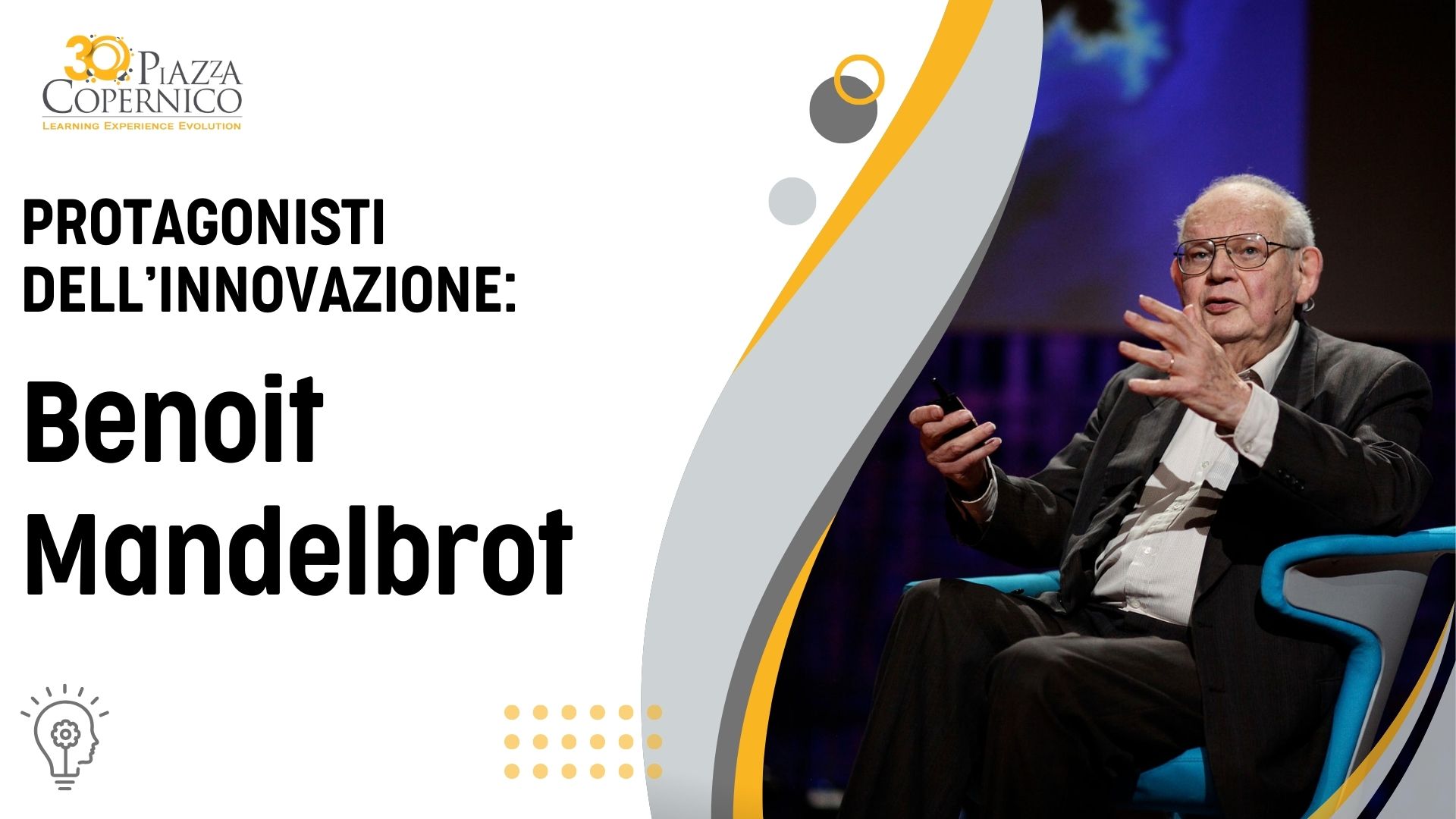
If we take the model proposed by Thomas Kuhn as valid, scientific revolutions, understood as a disruption of tradition through the adoption of new scientific paradigms, there is no doubt that the discovery of the brotherssuch by Benoit Mandelbrot rightfully represents one of these moments.
In fact, fractals have radically changed the way we understand and model the complexity of the real world.
Mandelbrot, in fact, demonstrated how many apparently chaotic or disordered forms and phenomena actually follow precise, and often incredibly simple, rules: this led to a new vision of the geometry and science in general.
Fractals have proven to be a phenomenal tool for analyzing complex objects and systems that cannot be adequately described by traditional geometry.
THE MANDELBROT FORMATION
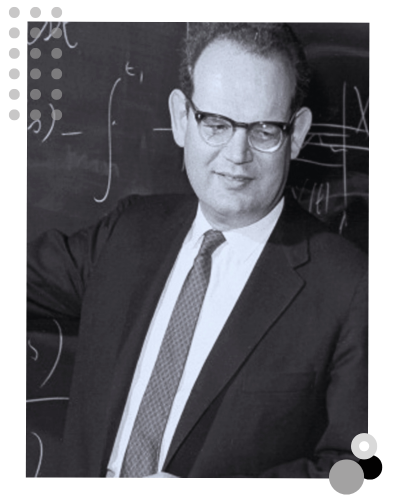
Benoit Mandelbrot was born in Warsaw, Poland in 1924. His family belonged to the good Lithuanian Jewish bourgeoisie: both his mother and his uncles held prominent positions in the academic-scientific world.
In 1936 the Mandelbrot family moved to Paris where, under the guidance of his two uncles, the young Benoit conducted his studies until he obtained his diploma. engineering at the École Polytechnique in Paris (1947) and then the master's degree in Science (1948) and in aeronautical engineering (1949) at Caltech in Pasadena.
He later collaborated with prestigious universities and private research centers as a teacher and researcher: among these Princeton, Harvard, Geneva, MIT and the IBM T. Watson Research Center.
In '93 he was awarded the Wolf Prize for physics, "for transforming our view of nature".
THE FRACTALS
Mandelbrot foreshadows the first intuition of the fractal nature of many natural objects in the famous paper published in 1967 "How Long Is the Coast of Britain? Statistical Self-Similarity and Fractional Dimension”, in which he observes how the length of the British coastline depends on the yardstick we use to measure it: the smaller it is, the more it will adapt to the rugged character of the coastline and consequently the greater its length will be. And this is a consequence of the fractal structure of the coastline.
Almost all apparently irregular and random shapes found in nature, such as trees, mountains, coasts, plants, etc., have a fractal structure, in the sense that they are characterised by self-similarity e self-similarity: the individual parts resemble or even are identical to the whole.
The most typical example is the Roman broccoli which reproduces in its various parts the shape of the whole broccoli, but the same is true for rivers, trees, our bronchi or our blood system.
In addition to self-similarity, fractals are characterized by fractional dimension: while traditional geometric figures have a whole dimension (a line has dimension 1, a square 2, a cube 3) fractal objects have an intermediate dimension between 1 and 2, where the closer it is to 1 the closer it is to a line while the closer it is to 2 the more it tends to fill the plane (the line is so convoluted that it fills the entire plane).
THE MANDELBROT SET
One of the discoveries most suggestive made by Mandelbrot is that of the set that bears his name. The set is defined by an extremely simple recursive function (z=z2+c) and gives rise to a overly complex and apparently irregular fractal, which, when processed with the aid of computer graphics, generates an intricate collection of fractal shapes of great beauty and incredible complexity.
BALANCED BETWEEN ORDER AND CHAOS
In essence, therefore, Mandelbrot not only revolutionized the way we look at complex objects in nature (with very practical consequences for medicine, economics, computer science, telecommunications, etc.), but he also shed important light on the theory of complexity and chaos, demonstrating how extremely complex structures can derive from very simple algorithms and how apparently chaotic objects actually respond to often elementary rules.
Fractals are balanced between order and chaos.
They configure systems that may appear unpredictable, but which follow precise rules.
WE THANK PAOLO RICCARDO FELICIOLI FOR THE CONTRIBUTION
Recent articles:
-
 Continuing education in the workplace: how can we make learning opportunities more equitable?10/11/2026
-
 Digital transformation has changed the tools we use. Now the way we design work must also evolve.03/11/2026
-
 What change do we want to make possible through training?28/10/2026
-
 Five areas for building healthier workplaces: from prevention to skills20/10/2026
-
 Mental Health at Work: EU-OSHA 2026–2028 Campaign Launches13/10/2026
-
 Horizon Business Game: Piazza Copernico brings the AI challenge to the university world.07/10/2026
-
 Compulsory training15/09/2026
-
 Fondimpresa Notice 1/2025: A new opportunity for corporate training starting October 27th08/09/2026
-
 Corporate Training 2026: From AI to ESG, Why This Fall Could Change Priorities01/09/2026
-
 Team engagement and resilience in large organizations26/08/2026