September, in large organizations, is rarely just a return.
 It's the time when many projects pick up speed again, budgets are reassessed in light of what happened during the year, and the first reflections on 2027 begin. For HR and L&D, this often means returning to the training plan with a very concrete question: Are the priorities set a few months ago still the right ones?
This year the question deserves a few more minutes.
Because while the business plans were taking their course, the surrounding context changed.
Artificial intelligence has entered a new regulatory phase. Sustainability has undergone significant regulatory simplification in Europe. Digital accessibility has become more visible on the business agenda. And in terms of funded training, opportunities continue to open up, specifically geared towards the skills needed to address digital, environmental, and organizational transformations.
These are different topics, certainly.
But for those who deal with people and skills they have one thing in common: They are transforming knowledge that until yesterday could only be the concern of a few specialists into skills that today must circulate much more widely throughout the organization.
And perhaps this is the real opportunity of autumn 2026.
Don't chase yet another emerging theme.
But understanding which transformations are now mature enough to become a permanent part of the training strategy.
What you will find in this article
Not a list of new tasks to add to the agenda.
Let's try instead to read some signals that are converging in recent months — AI, sustainability, accessibility and skills development — and look at them from the point of view of HR, L&D and Corporate Academy.
To understand not only what is changing, but above all, what questions might be useful to bring into the construction of future training plans and what role partners, processes, and tools can play in transforming change into organizational capacity.
AI has moved beyond the curiosity stage
At the beginning they were mainly experiments.
A better-written prompt. An assistant that sped up a search. A first attempt at content generation. A few particularly curious teams starting to use generative AI tools in their work.
Within a very short time the situation changed.
AI has entered everyday activities much faster than many organizations have been able to build shared expertise in its use.
And it is significant that the European regulatory framework itself is moving in the same direction.
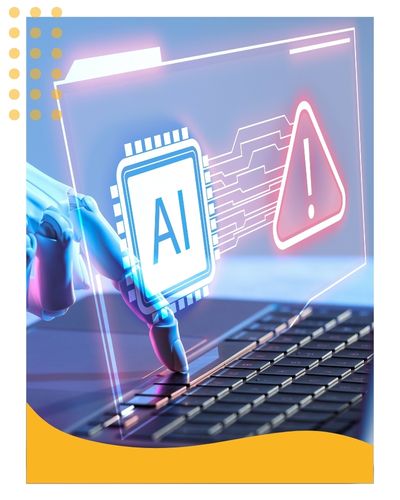 The AI Literacy Remains a Mandatory Threat for Providers and Deployers of Artificial Intelligence Systems: must adopt measures to support the development of skills for staff using or managing these systems. Following the amendments introduced in July 2026, the Regulation no longer requires a uniform level of literacy, but requires consideration of knowledge, experience, training, and, above all, the context in which AI is used. Since August 2, 2026, supervision of the application of Article 4 has also entered its operational phase.
This evolution contains an interesting indication for L&D.
AI training doesn't necessarily mean training everyone the same way.
Those who use a generative tool to write a first draft have different needs than those who introduce AI into an HR process, those who work with sensitive data, or those who need to evaluate output produced by an automatic system.
The transition from “introduction to AI” to AI Literacy by Role, Context, and Responsibility It will probably be one of the most interesting topics of the coming months.
We have already explored the relationship between skills and daily use in this article. AI Literacy: How to Manage Shadow AI Before It Becomes an Organizational Risk and in the path dedicated to theAI Act and the productive and responsible use of artificial intelligence.
But there is a further step.
AI itself is no longer just something on which to train. It is also becoming a tool for learning.
Intelligent tutors, conversational simulators, retrieval agents, and adaptive environments are starting to transform digital learning itself. This is an area in which our R&D team is working through AI Learning Tools in Piazza Copernico.
For Corporate Academies, this opens up a double reflection: develop skills to use AI and simultaneously understand where AI can enhance skill development.
The conversation on ESG is also changing
There is another topic on which it might be useful to update some training plans: sustainability.
In 2026, the European Union significantly simplified the CSRD and CSDDD through the Omnibus I package. The new rules reduced the number of companies directly subject to reporting and due diligence obligations, focusing them on larger organizations.
This evolution could be interpreted as a reduced need to deal with ESG.
It would probably be the least interesting reading.
Why Simplifying reporting does not mean erasing the transformation that generated it.
Energy, emissions, inclusion, equality, responsible supply chain management, governance, and the sustainability of business models continue to impact the decisions of large organizations. What's changing, however, is how these dimensions must be translated into behaviors, processes, and competencies.
And this is precisely where training can make a qualitative leap.
After a first season strongly oriented towards explaining What does ESG mean?, the question for many organizations can become much more interesting:
What does a person need to know about sustainability to make better decisions in their role?
For a Procurement company, this could mean learning to read ESG elements in relationships with suppliers.
For a manager, understanding how some organizational decisions produce social and environmental effects.
For HR, work on inclusion, equality and organizational culture.
For other functions, sustainability can mean processes, consumption, mobility, governance, or customer relationships.
It is the transition from sustainability awareness to the sustainability competence.
For those who are working on these themes, Piazza Copernico already has dedicated routes to fundamentals and applications of ESG sustainability, sustainability as a factor in business evolution and the gender equality.
Accessibility: When a requirement improves the project for everyone
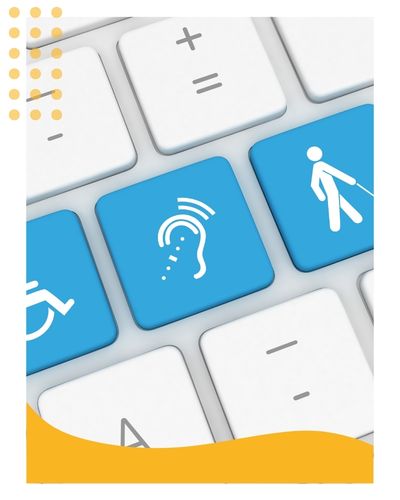 Digital accessibility is also going through a similar transition.
The European Accessibility Act applies to specific categories of products and services from June 28, 2025. This doesn't mean that all corporate training content automatically falls within its scope, but its cultural and design impact is broader: Accessibility is becoming a normal criterion by which we evaluate the quality of the digital experience.
And it's a positive development.
Because when accessibility is addressed well, it's not just about compliance, and it's not just about people with permanent disabilities.
Subtitles, clear structure, understandable navigation, readability, alternatives to different perceptive channels, and greater flexibility in use can improve the experience of a much wider corporate population.
This is also why accessibility has gradually entered the design process in Piazza Copernico.
The catalogue is now designed according to criteria WCAG AA and the work involves dedicated specialist skills, within an approach that considers accessibility already in the construction of the training experience.
Those who want to learn more can explore our work ondigital educational accessibility.
For L&D, however, the interesting question is broader:
If we were designing a new catalog or a major corporate journey today in 2027, would it still make sense to consider accessibility as a later addition?
More and more often the answer will be no.
What if part of this transformation could be financed?
We thus arrive at a particularly interesting element at this stage of the year.
Because AI, digital, sustainability, organizational development, and new skills aren't just topics worth investing in.
These are also some of the areas towards which important measures have been directed in recent years. funded training.
The New Skills Fund 3, significantly named “Skills for Innovation”, reached in 2026 a total endowment of 1,15 billion euros and was built specifically to support digitalization, environmental sustainability, and energy efficiency through skills development.
The data is interesting even beyond the single measurement.
It tells us where public investment in training is being directed: less and less towards generic updating, more and more towards skills linked to real transformations of the company.
And right in these weeks there are additional windows to observe, making September a good time to do a check.
Don't start from the announcement and ask yourself:
“What training can we include?”
But start from the priorities that the organization already has and ask yourself:
“which of these investments can we support also through the available opportunities?”
The difference seems small.
Strategically it is huge.
Funded training works best when accelerates a transformation that the company has already decided to undertake, instead of generating paths built only because a line of funding exists.
Piazza Copernico supports organizations in this direction, from assessing opportunities to designing, managing, monitoring, and reporting plans. The various options are summarized in our dedicated area. funded training for companies.
Maybe we don't need more courses. We need a more intelligent reading of priorities.
ESG. Accessibility. Cybersecurity. Well-being. Management skills.
 The risk, as priorities increase, is that the training plan becomes an ever-increasing list.
A course for every new need.
One form for each update.
Another entry to add to the catalog.
But a Corporate Academy does not become more strategic because the number of contents increases.
It becomes more strategic when it can read the changes and decide which skills really need to become part of the organization's assets.
Maybe this fall can be used for just that.
Not to immediately add training, but to look to 2027 by asking ourselves some better questions.
AI is already being used: which people need to learn to use it better?
ESG objectives are entering processes: which roles should translate them into decisions?
Our digital environments are evolving: is accessibility already part of the criteria by which we design them?
Do we have any planned training investments that could be covered by available funds?
They are not four separate projects.
There are four ways of asking how ready our organization is for what is already changing.
The value of a partner, right now, is being able to hold things together
It is also from this perspective that we are evolving our work in Piazza Copernico.
Funded training allows us to support the financial and administrative planning of programs. The accessible catalog allows us to work with large corporate populations. Internal AI research allows us to experiment with new learning methods. Programs on AI Literacy, sustainability, security, DE&I, and managerial skills allow us to address issues facing organizations.
This is complemented by our certified systems for quality, information security, environment, health and safety, gender equality, social responsibility, and governance: not as a separate commercial issue, but as a framework that supports the way these services are designed and managed. The complete overview is available in the section Who we are and certifications of Piazza Copernico.
And on AI we have chosen to support technological development with an internal presence: our own AI team has been active since December 2025. Corporate Committee for Artificial Intelligence, created to support training, informed use, and regulatory updates.
This does not mean that every organization needs all of these at the same time.
It means being able to start from a simpler question:
what do you need now?
Use autumn to choose, not just to start again
 The last months of the year naturally tend to accelerate.
There are goals to complete and new budgets to build. But precisely for this reason, it can be a good time to pause the flow of training requests for a moment and look at it from above.
2026 is leaving us some pretty clear signals.
AI is moving from experimentation to organizational expertise.
Sustainability is moving from a focus solely on reporting to the need to enter into behaviors and decisions.
Accessibility is becoming part of digital quality.
Funded training continues to offer tools to support digital, environmental, and organizational transformations.
Perhaps the useful question for the next training plan is therefore not:
“What courses should we add?”
But:
“What capabilities do we want our organization to have in a year that it doesn’t yet have enough of today?”
It is in this space that certifications, governance, research, and design cease to be separate elements and become part of the same value: making training more consistent with what the organization wants to build.
Our experts are at your side to guide you along this journey, from identifying priorities to building coherent and sustainable training solutions.
Let's discuss the skills that can make a difference tomorrow today.
Recent articles:
-
 Horizon Business Game: Piazza Copernico brings the AI challenge to the university world.07/10/2026
-
 Compulsory training15/09/2026
-
 Fondimpresa Notice 1/2025: A new opportunity for corporate training starting October 27th08/09/2026
-
 Corporate Training 2026: From AI to ESG, Why This Fall Could Change Priorities01/09/2026
-
 Team engagement and resilience in large organizations26/08/2026
-
 Summer, work, and wellness: why organizations shouldn't wait until after school to discuss them.28/07/2026
-
 Conscious Leadership & Skill Mapping: Cultivating Talent22/07/2026
-
 World Youth Skills Day 2026: Youth Skills Are Not a "Tomorrow's" Issue15/07/2026
-
 Pico Learning Spaces: Adaptive Learning that Transforms AI into a Real Learning Environment08/07/2026
-
 Intelligent Catalogs: How AI is Transforming Skills-Based Learning01/07/2026