There are contents that an organization must make available to everyone, update over time, and monitor continuously.
This is why mandatory training is, by definition, necessary.
But its very recurrence can generate one of its greatest weaknesses.
When content becomes familiar, it doesn't necessarily become more effective. Sometimes it simply becomes easier to navigate it without really questioning what it requires.
It's the risk of automatism.
You recognize the topic. You already know some of the terminology. You complete the course. You pass the final exam.
Then comes the real work.
And there, situations rarely present themselves in the form of multiple-choice questions or explicit, “textbook” knowledge.
A procedure, a rule, or a crucial piece of information must be recalled in its actual context, all while something else is happening. A signal must be distinguished from irrelevant information in the complexity of events. A rule must be applied to a case that doesn't perfectly match the one described during the course. Sometimes you have to decide how to intervene, what to ask, when to stop, or who to involve.
This is where one of the most interesting themes in the design of mandatory training emerges: the gap between remembering knowledge and being able to use it in a variable context.
For organizations that already have robust compliance training systems in place, the question is perhaps no longer simply how to ensure completion, traceability, and updating.
It is also:
How can we prevent repetition from turning important knowledge into something that people gradually stop questioning?
What you will find in this article
We'll build on this gap to explore the role of AI conversational simulators: not as an additional technological layer to add to training, but as a practice and experience environment in which to test knowledge, understanding, and decision-making skills. We'll explore why scenario variability can be an attractive lever in mandatory curricula, how to incorporate it into a training program without losing control and teaching coherence, and what value it holds when it's part of an end-to-end training system.
We'll continue this conversation live at People Tech Forum 2026: on October 1st at 11:00 a.m., we'll bring our conversational simulators to the Demo Stage, and throughout both days of the event, you'll be able to explore use cases and applications with our experts at our Piazza Copernico booth.
When familiarity stops being an advantage
 The problem isn't repeating. It's repeating in the same way over and over again.
Recurrence is not, in itself, a limitation.spaced repetition (i.e. multiple times over time) is an important factor for learning retention maintaining available knowledge and behaviors that cannot be entrusted to occasional memory.
The problem arises when it is not only the content that is repeated, but also the form in which it is requested to be processed.
Same sequence.
Same type of verification.
Same predictability.
At that point, a person can become very effective at recognizing what the process expects of them, without necessarily being equally ready to transfer it to a new situation. The greatest risk is that it leads us to ask: is the verification mechanism learned, or is there true learning?
For this reason, in mature programs, the focus should not simply be on making mandatory training “more engaging.”
This is too weak a formulation.
The most interesting question is reintroduce variability where knowledge risks becoming automatic.
And it's one of the spaces where conversational simulations can produce value.
Don't add any more content. Change what we ask the person to do.
The use of AI in training is often associated with the ability to generate, synthesize, or personalize content more quickly.
These are important possibilities.
But in compulsory training, AI opens up an even more interesting possibility: not simply add content or customize what is proposed, but enable a personal and self-directed learning path.
It is a change of perspective close to the principles of theheutagogy and self-determined learning: the person is not only the recipient of an experience designed for them, but becomes an active part of the process, called to explore, choose, experiment, reformulate and make decisions.
This is where the concept of comes into play. : the ability to act intentionally, autonomously and proactively to direct one's own learning and influence the context in which one operates.
From this perspective, AI does not replace the teaching project and does not eliminate the need for content management. However, the role of the person within the experience changes.: from those who receive and verify knowledge to those who must activate it, test it and use it to orient themselves in a situation.
Conversational simulators become particularly interesting precisely because they make this transition concrete: they don't just ask you to recognize what you've learned, but they create a space in which you must read the context, decide how to proceed, and observe the consequences of your choices.
Entering a scenario.
Interpret what is happening.
Ask questions.
Evaluate the information that has already emerged.
Choose an answer.
Review your approach and take action when the situation changes.
When we started developing our AI conversational simulators, the design process began as a training space. Being able to work on different levels of complexity: from a limited task to situations where it's necessary to maintain coherence between multiple pieces of information or decode the scenario and progressively use the collected data to arrive at a decision or intervention.
It's a substantial difference.
Because it shifts the experience from:
“What is the correct answer?”
to the:
“how do I recognize that this is the situation in which that knowledge becomes relevant in my action strategy? "
Variability as part of instructional design
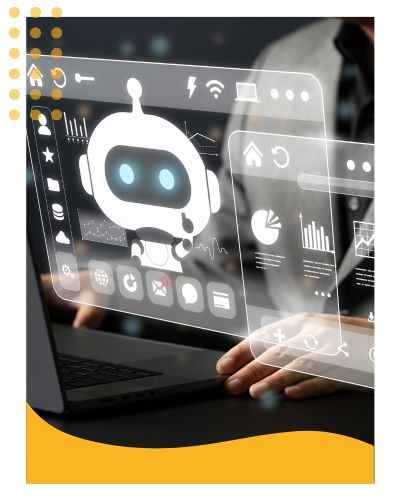 Here, generative AI offers something that a classical branching simulation struggles to guarantee at the same level: the possibility of building interactions that are not perfectly identical on every attempt.
This does not mean allowing the scenario to become unpredictable or educationally uncontrolled.
Unlike.
The value of an AI conversational simulator proprietario It arises precisely from the ability to precisely define objectives, roles, available information, constraints, KPIs and evaluation logics, while leaving enough variability in the conversation to allow experimentation with different response strategies, to train and improve one's behaviors.
The simulator can combine multiple interlocutors with whom the participant interacts, agents who observe the progression against KPIs and an educational mentor who can provide guidance during the experience. and provide a final re-reading of the situation.
The entire conversation is tracked for later review and the KPIs achieved are stored in the SCORM tracking.
Technology, therefore, does not coincide with the teaching project.
It makes it possible at a different level of articulation.
And this is especially important for mandatory training, where innovation cannot mean compromising control, consistency, or oversight of content.
From completion to transfer: without confusing the two plans
For a large organization, completion remains essential.
It is important to know who participated, what course they completed, what tests they took, and what certificates were produced.
But it would be a mistake to ask that data to tell something it cannot tell on its own.
Completion tells us that an activity has been completed.
An assessment tells us how a person responded to a particular test.
A simulation can add another level: observing how knowledge is mobilized when context requires interpretation and choice.
They are different plans.
And that's precisely why they can be complementary.
The advantage lies not in replacing the previous model with a new one, but in designing a system in which each element responds to the question for which it was built.
This is where mandatory training can make a qualitative leap without losing its solidity.
Innovation fatigue also arises from solutions added without a specific function
 Then there is a second risk.
Large organizations don’t need another tool just because it introduces AI.
In recent years, HR, L&D, and Corporate Academies have already absorbed platforms, new formats, analytics, collaborative tools, skill intelligence systems, and generative applications.
Technology availability is growing much faster than the ability to integrate it sensibly into processes.
It is one of the forms that theinnovation fatigue: not resistance to innovation itself, but saturation with respect to innovations that demand attention without solving a problem with sufficient clarity.
For this reason the starting point should remain a planning one:
What real need do you want to address?
In compulsory training, one of the most recurring gaps concerns the distance between formally acquired knowledge and the ability to recognize that knowledge within a concrete situation.
If the simulator intervenes there, the technology has a function.
If it simply becomes another layer to add to the path, it risks having the opposite effect.
From Caterina Copernico to conversation as a learning environment
This research direction, for Piazza Copernico, did not originate with today's simulator.
In November 2025 Catherine Copernicus, an Artificial Intelligence application, participated in the Forum Continuing education is compared promoted by Fondoprofessioni.
During the dispute dedicated to “AI for and in continuing education”Caterina took on the role of "devil's advocate" in her discussion with Professor Emanuele Frontoni. The event's format required the AI to do more than simply provide a response: to support a position within a dialogue and contribute to a dynamic of discussion.
The conversation has continued since then.
Not just as an interface.
As a environment in which to test interpretation, decision-making and behavior.
Conversational simulators represent one of the developments of this path: structured scenarios, agents with different roles, evaluation against KPIs, progressive levels of complexity, and the possibility of working on exercises designed around specific training objectives.
It is one of the declinations that we give to our Learning Experience Evolution: don't chase technological change, but understand where it can improve the learning experience.
The true value emerges when the simulator enters a system
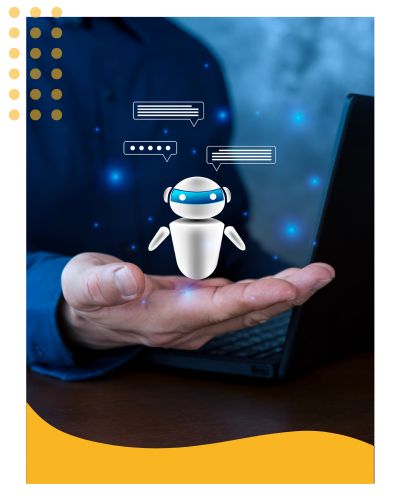 For those who manage large-scale training, this step is crucial.
The simulator is not a parallel project to the mandatory training but is part of the same architecture.
- Contents.
- LMS.
- Tracking.
- Assessment.
- Tutoring.
- Reporting.
- Updates.
- Management services.
And here comes the advantage of reasoning with a end-to-end learning provider: start from the overall need and decide which components to activate, instead of building the project around a single technology.
Because in complex organizations, the quality of a solution does not depend solely on what it can do in isolation.
It also depends on how well it fits into the system that has to govern it.
A further opportunity: to also integrate funded training
Within the same approach, Piazza Copernico has an area dedicated to funded training, which supports organizations in identifying opportunities, designing, managing, monitoring, and reporting plans.
This is not the starting point of the project and does not mean that every mandatory training intervention can be funded.
However, it is an additional competence that can be activated when the characteristics of the project and the specific financing instrument allow it.
For a large organization this means being able to verify this possibility too. without separating it from the overall training planning.
The conversation continues at the People Tech Forum 2026
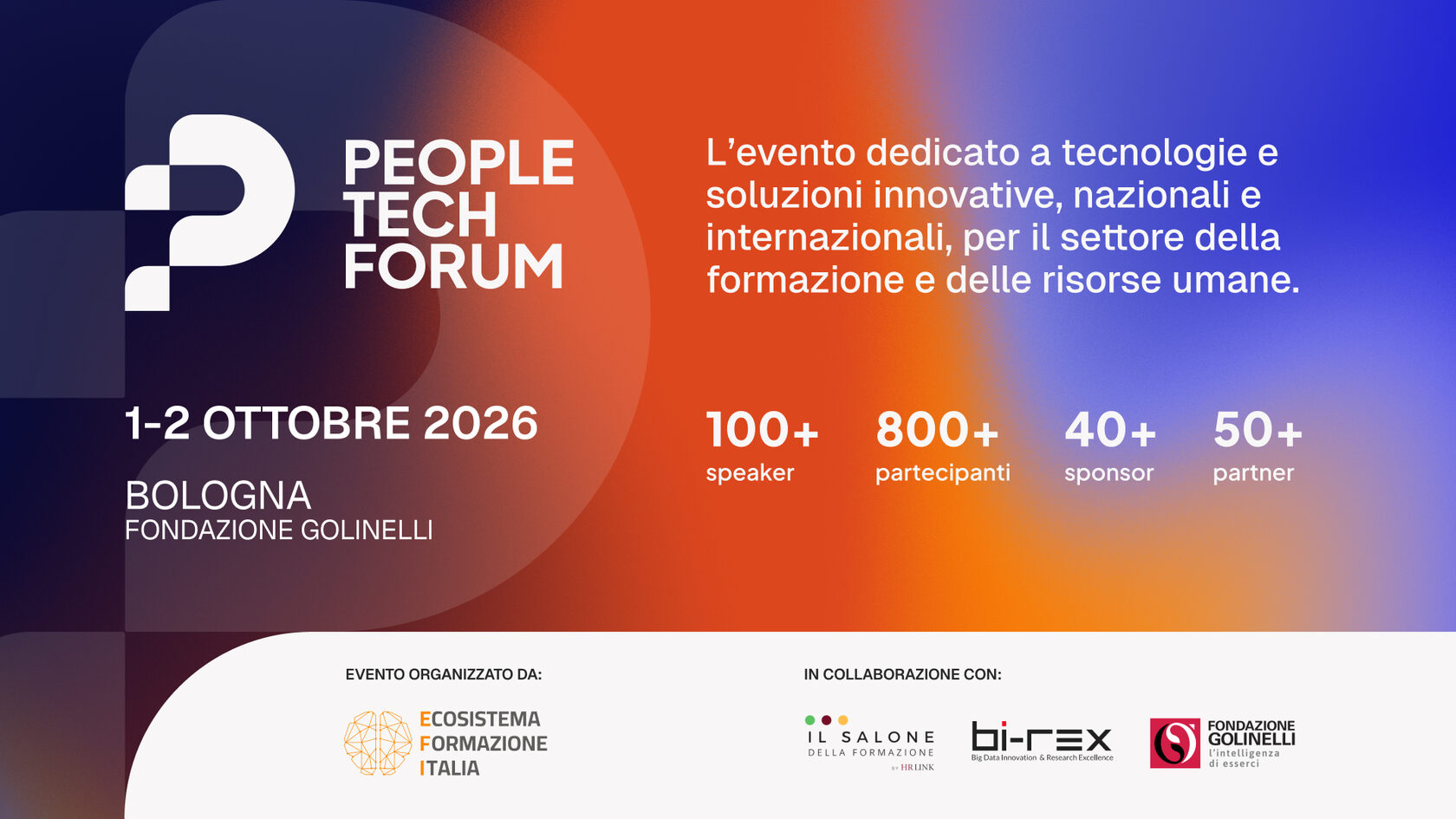 The next step will be live.
Il October 1st at 11:00 am, at the People Tech Forum 2026 in Bologna, we will bring to the Demo Stage a Product Demo dedicated to AI conversational simulators.
Not just to tell what technology can do.
But to show what changes when training asks the person to enter a situation, gather information, interact and choose how to proceed.
And, of course, the conversation will continue after the demo.
Il October 1st and 2nd At our stand, we'll discuss potential application scenarios with HR, L&D, and Corporate Academy, from mandatory training to more complex skills development programs.
See you at the People Tech Forum 2026
October 1, 11:35 AM | Product Demo – AI Conversational Simulators
October 1–2 | Bologna
When training is mandatory, completing the course is necessary.
Making sure that knowledge remains usable when the situation changes is the next step.
This is the space we are working on.
Come see the conversation simulators in action and continue the conversation with our experts.
WRITE TO US FOR MORE INFORMATION
Recent articles:
-
 Continuing education in the workplace: how can we make learning opportunities more equitable?10/11/2026
-
 Digital transformation has changed the tools we use. Now the way we design work must also evolve.03/11/2026
-
 What change do we want to make possible through training?28/10/2026
-
 Five areas for building healthier workplaces: from prevention to skills20/10/2026
-
 Mental Health at Work: EU-OSHA 2026–2028 Campaign Launches13/10/2026
-
 Horizon Business Game: Piazza Copernico brings the AI challenge to the university world.07/10/2026
-
 Compulsory training15/09/2026
-
 Fondimpresa Notice 1/2025: A new opportunity for corporate training starting October 27th08/09/2026
-
 Corporate Training 2026: From AI to ESG, Why This Fall Could Change Priorities01/09/2026
-
 Team engagement and resilience in large organizations26/08/2026