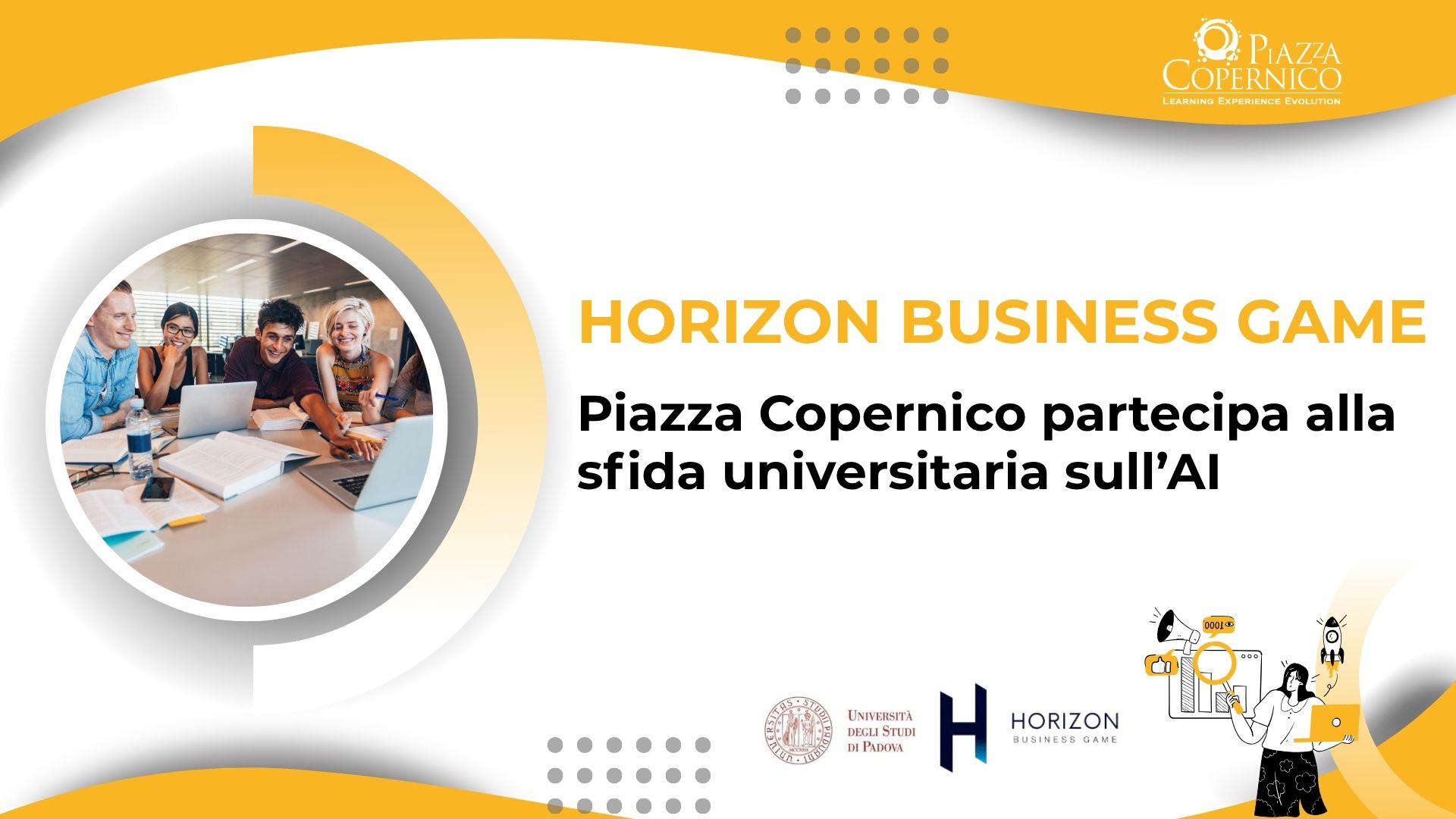
Copernico Square participates in theHorizon Business Game, the contest promoted by the University of Padua that connects students, universities, and businesses through a concrete challenge on the themes of innovation and business. For this edition, the project we're involved with addresses one of the most pressing questions for organizations: how to build a business model for AI and how to address the issue of pricing of artificial intelligence.
This initiative represents an opportunity for us to share our perspective with young talent and, at the same time, to closely observe how new skills and perspectives can contribute to interpreting a transformation that is already shaping products, services, and organizational models.
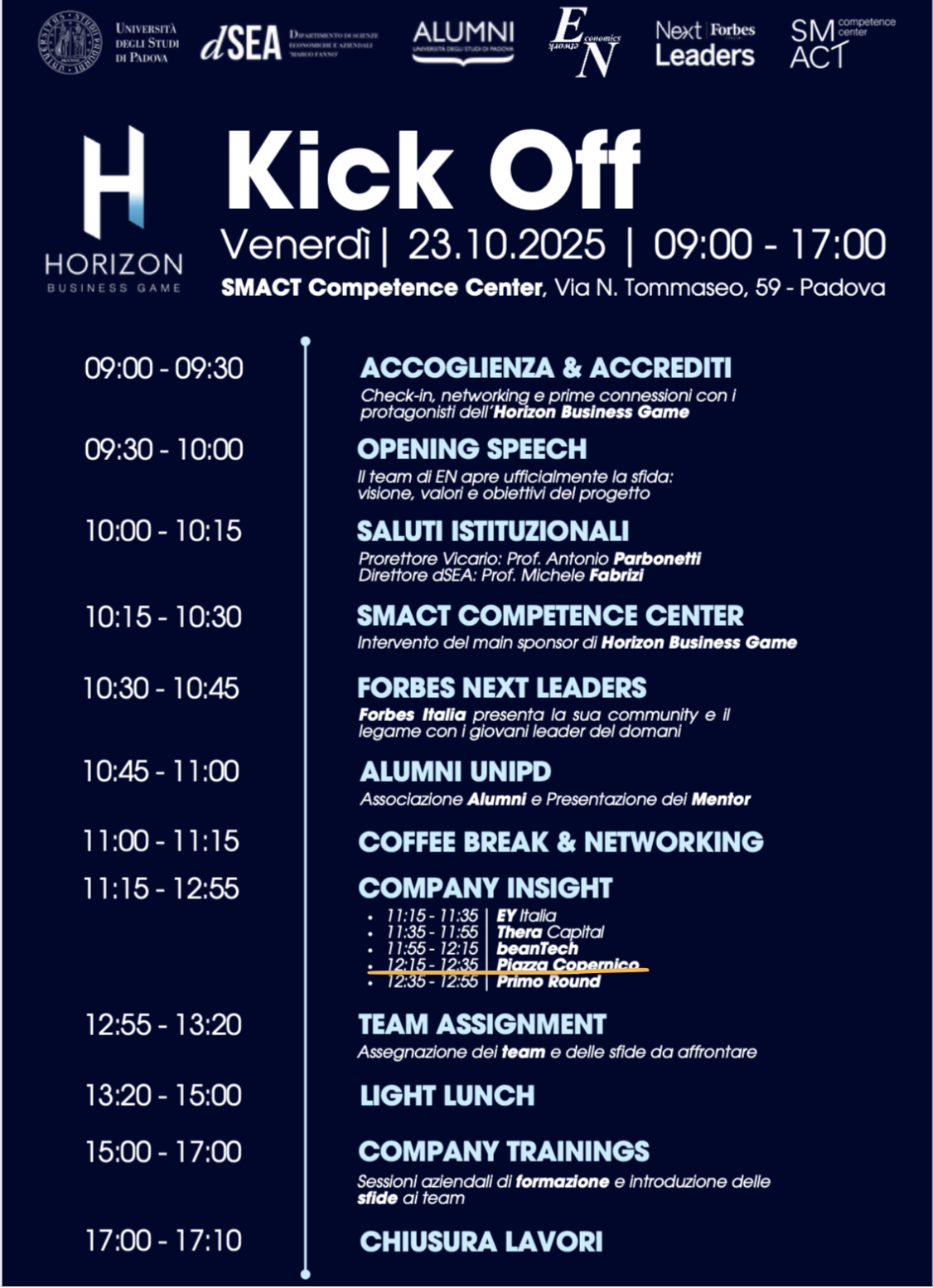
What is Horizon Business Game?
The Horizon Business Game is a project experience organized by the Economics Network of the University of Padua. The format involves students in a process lasting approximately two months, during which participants work on business challenges and develop proposals to be presented in the final phase of the competition.
The University describes Horizon as an immersive experience that combines training, work on real-world problems, networking, and interaction with professionals and businesses. In the edition currently presented by the University, the project involves 45 students and includes a process from kickoff to final pitch, with activities also dedicated to artificial intelligence.
It is precisely this connection between training and the world of work This makes the initiative particularly interesting. For companies, participating in experiences like this also means gaining access to skills, ideas, and perspectives that could become resources for the future.
Horizon Business Game and AI business model
The challenge that has been proposed to us concerns the AI business model and the analysis of the pricing of AI-based services and solutions.
This is far from a simple topic.
Introducing AI into business processes isn't just a technological choice. When a technology becomes an integral part of a product, service, or process, it's also necessary to consider its economic sustainability: what are the costs? What value does it generate? How should it be measured? What pricing model can be applied?
These questions become even more relevant at a time when organizations are experimenting with very different applications of artificial intelligence, from process automation to content generation, from data analysis to training and proprietary AI tools.
The University of Padua is also paying attention to the relationship between AI, management and business innovation, through training courses aimed specifically at understanding the opportunities for applying artificial intelligence in business processes.
From technology to economic value
 For Piazza Copernico, participation in theHorizon Business Game It will also be an opportunity to broaden the reflection beyond technology.
Talking about AI means talking about transformation: the tools are changing, but so are the processes, the required skills, the organization of work, and the way value is produced and distributed.
For this reason we also want to bring a broader question into the challenge: How can we economically measure the real impact of the change introduced by artificial intelligence?
It's not just about estimating the cost of an AI solution or identifying a selling price. The key is understanding the relationship between investment, technology use, benefits generated, and process transformation.
An AI system, for example, can generate value through greater efficiency, reduced time, improved service quality, new ways of interacting with users, or through the ability to develop products and services that were previously difficult to produce.
The real challenge then becomes identifying how to measure this value and how to transform it into a sustainable business model.
AI, skills and new talents
Another important element of theHorizon Business Game it is the relationship with the new generations of professionals.
Artificial intelligence skills are becoming increasingly transversal. They concern not only those who develop technologies or models, but also those who work in marketing, process management, training, finance, and management roles.
Interaction with students from different backgrounds therefore allows us to observe the problem from multiple perspectives and test different approaches.
This is also why we consider this initiative an important opportunity for talent attraction. Contact with young people who are building their professional skills allows companies to present themselves as places where innovation, learning, and experimentation can meet.
The Horizon experience is part of a university ecosystem increasingly focused on the relationship between education, innovation, and business. Other University of Padua initiatives, such as Start Cup Padova, also aim to foster the intersection of innovative ideas, skills, and the business world.
A challenge that concerns the future of business
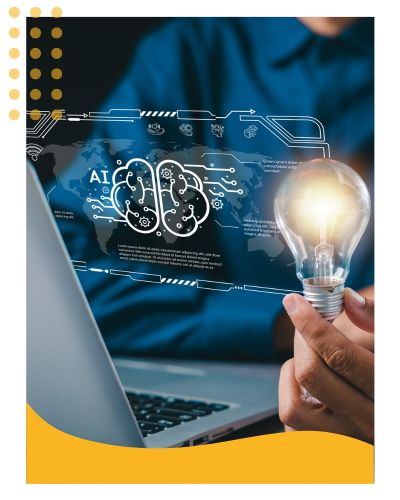 AI is rapidly entering organizations, but many questions about its economic and organizational impact remain unanswered.
How much is an AI-based solution really worth? What factors should be considered when determining pricing? How do you measure return on investment? And above all, how does the business model change when a technology like AI becomes a structural part of the offering?
These are questions that cannot be addressed solely from a technological perspective. They require economic, managerial, organizational, and design skills.
With our participation in theHorizon Business GameWe want to contribute to this very debate: by sharing our experience and expertise, listening to new perspectives, and working with young talents on a concrete issue that already affects businesses today.
For Piazza Copernico, it will therefore be an opportunity to explore together the relationship between artificial intelligence, innovation and economic value, transforming a still open question into a concrete design challenge.
And this is precisely the perspective with which we approach theHorizon Business Game: not just as a competition, but as a space where training, business, and innovation can meet to build new solutions.
Stay up to date on all the news from Piazza Copernico
Recent articles:
-
 Continuing education in the workplace: how can we make learning opportunities more equitable?10/11/2026
-
 Digital transformation has changed the tools we use. Now the way we design work must also evolve.03/11/2026
-
 What change do we want to make possible through training?28/10/2026
-
 Five areas for building healthier workplaces: from prevention to skills20/10/2026
-
 Mental Health at Work: EU-OSHA 2026–2028 Campaign Launches13/10/2026
-
 Horizon Business Game: Piazza Copernico brings the AI challenge to the university world.07/10/2026
-
 Compulsory training15/09/2026
-
 Fondimpresa Notice 1/2025: A new opportunity for corporate training starting October 27th08/09/2026
-
 Corporate Training 2026: From AI to ESG, Why This Fall Could Change Priorities01/09/2026
-
 Team engagement and resilience in large organizations26/08/2026